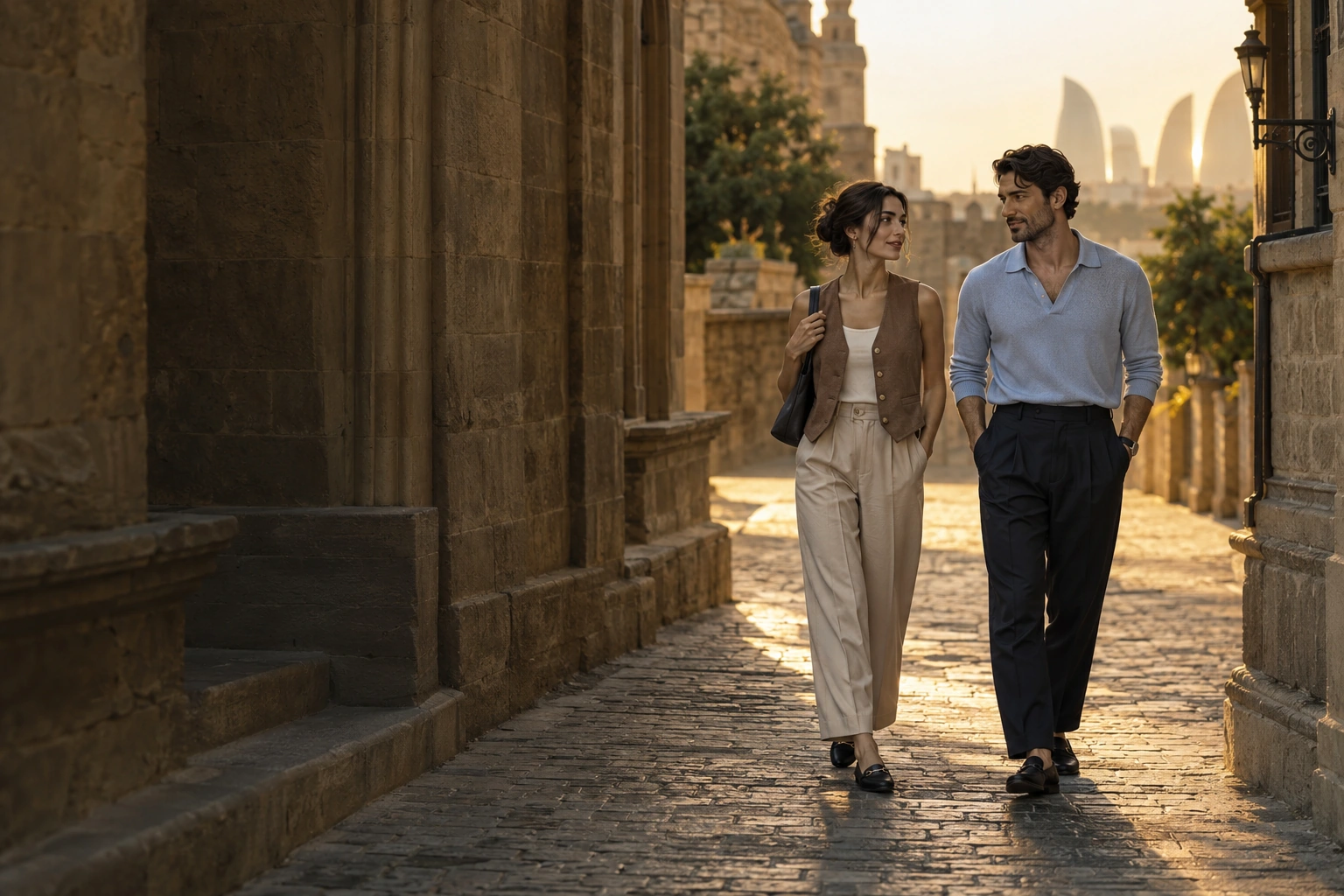
BAKU 2026 · STYLE
What to Wear in Baku for the Azerbaijan Grand Prix
Light tailoring, polished separates and one expressive detail: a race-weekend wardrobe for the circuit, the city and after dark.
The Baku Formula
Baku calls for autumn dressing in outline rather than weight. A defined shoulder, a fluid trouser, a shirt with a little more character: the season’s ideas translate well to a race weekend without bringing the heavy coats along.
For 2026, our starting point is the meeting of tailoring and everyday ease, with a more decorative turn for evening. These are directions drawn from the autumn/winter collections, adapted to the practical demands of visiting Baku—not a prescription to dress like a runway model or replace everything in your suitcase.
Build around an intentional silhouette, one removable layer and one expressive detail. The same trousers should work with a collared knit at the circuit and a different shirt at dinner. A jacket should earn its place when you put it on and be manageable when you take it off. The result is a wardrobe that leaves room for the weekend itself.
Trackside by Day
Start with the shape. COS’s Autumn/Winter 2026 menswear brings narrower tailoring into conversation with everyday styling; Chloé’s Winter 2026 collection gives familiar jackets stronger shoulders. There is no single compulsory fit. What matters for Baku is definition without the weight of a conventional winter suit.
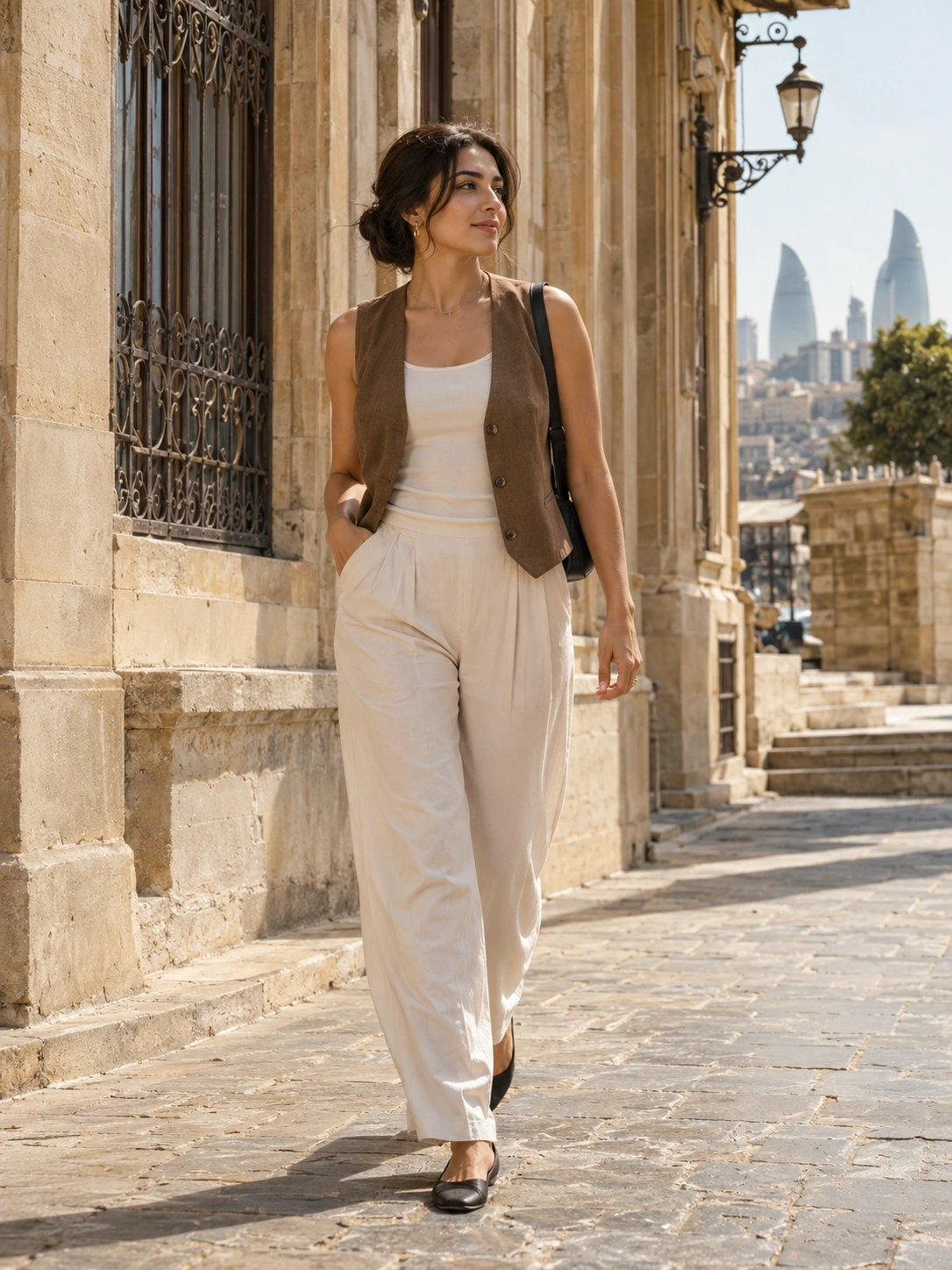
For women, a lightly constructed waistcoat with relaxed trousers makes a useful starting point. Wear it over a fine tank or a fluid short-sleeved shirt, or choose a sleeveless top and carry an unlined blazer. Keep the waist comfortable when seated and the trouser hem clear of the ground. A longer skirt works too, provided its cut allows a proper stride and does not need constant attention in the wind.
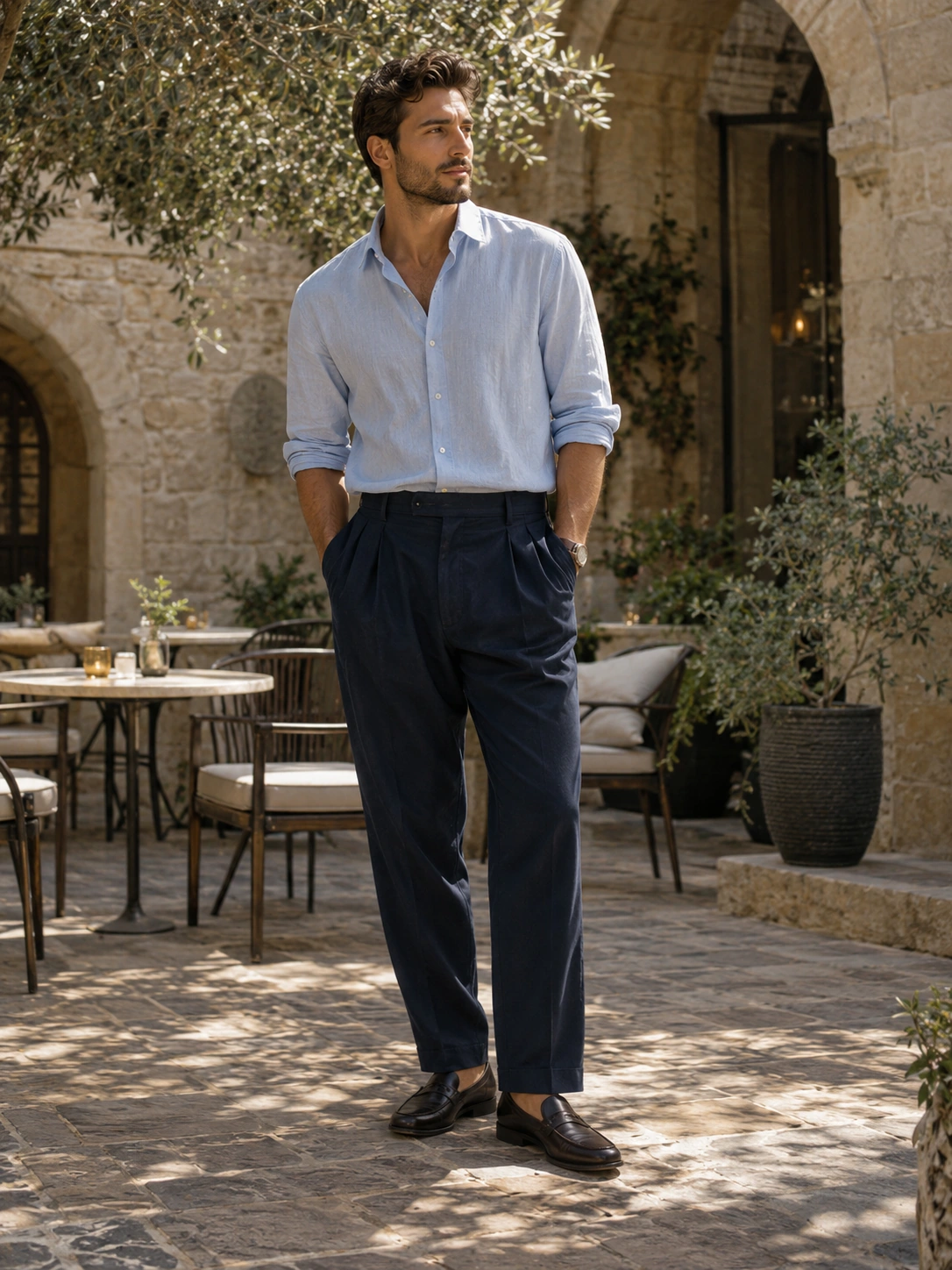
For men, pair an open-collar knit or refined polo with a pleated trouser. A cotton shirt is an equally good foundation: worn open at the neck, with sleeves turned back when needed, it takes tailoring out of the office. Add a light jacket for hospitality or a later reservation if it suits the occasion, rather than assuming that polish requires wearing it all afternoon.
These combinations need not be neutral from head to toe. Navy with pale blue, tobacco with cream, or charcoal with a clear red accent can give the look character. Treat these as colour suggestions, not a decree about the season’s winning shade. Team colours can enter just as easily through a shirt or cap.
Check construction as closely as composition. A densely knitted cotton polo can feel heavier than its label suggests; a fully lined linen jacket may be less useful than expected. Try the whole outfit seated, with the bag on your shoulder and the pockets occupied.
Footwear deserves the same attention. A familiar trainer, loafer or secure flat is a better circuit companion than an untested pair chosen for a photograph. Flat does not automatically mean comfortable. Keep the bag compact and hands-free where possible, leaving enough room for the essentials without making it another piece of luggage.
Between Sessions
The most useful change for a city stop is often subtraction. Take off the blazer, loosen the collar and let the base outfit stand on its own. If it only works fully layered, reconsider it before packing.
A small change can then alter the mood: exchange a plain top for a striped shirt, introduce a patterned scarf, or add a single piece of jewellery. For women, a fine knit and tailored skirt can move easily beyond the circuit; for men, an open-collar shirt gives the same trousers a less sporting feel. Neither requires a second wardrobe.
For an accessory with a genuine connection to Azerbaijan, consider the kelaghayi. This traditional silk headscarf belongs to a local craft tradition that includes wax-resist patterning, described by the Azerbaijan Tourism Board. Its colour and pattern offer a more personal point of interest than a generic souvenir.
Our styling suggestion is to let the silk interrupt a simple outfit: folded at the neck when comfortable, or carefully secured to a bag handle when it is too warm to wear. Avoid long trailing ends on a windy day. Ask about the maker and technique when buying; the craft is the reason to choose it, not a claim that every local is wearing one this season.
Keep city plans realistic for the time available and the shoes you have on. The Baku Race Weekend covers the event’s practical side; here, the aim is to arrive at your next stop looking composed without needing a complete change first.
After Dark
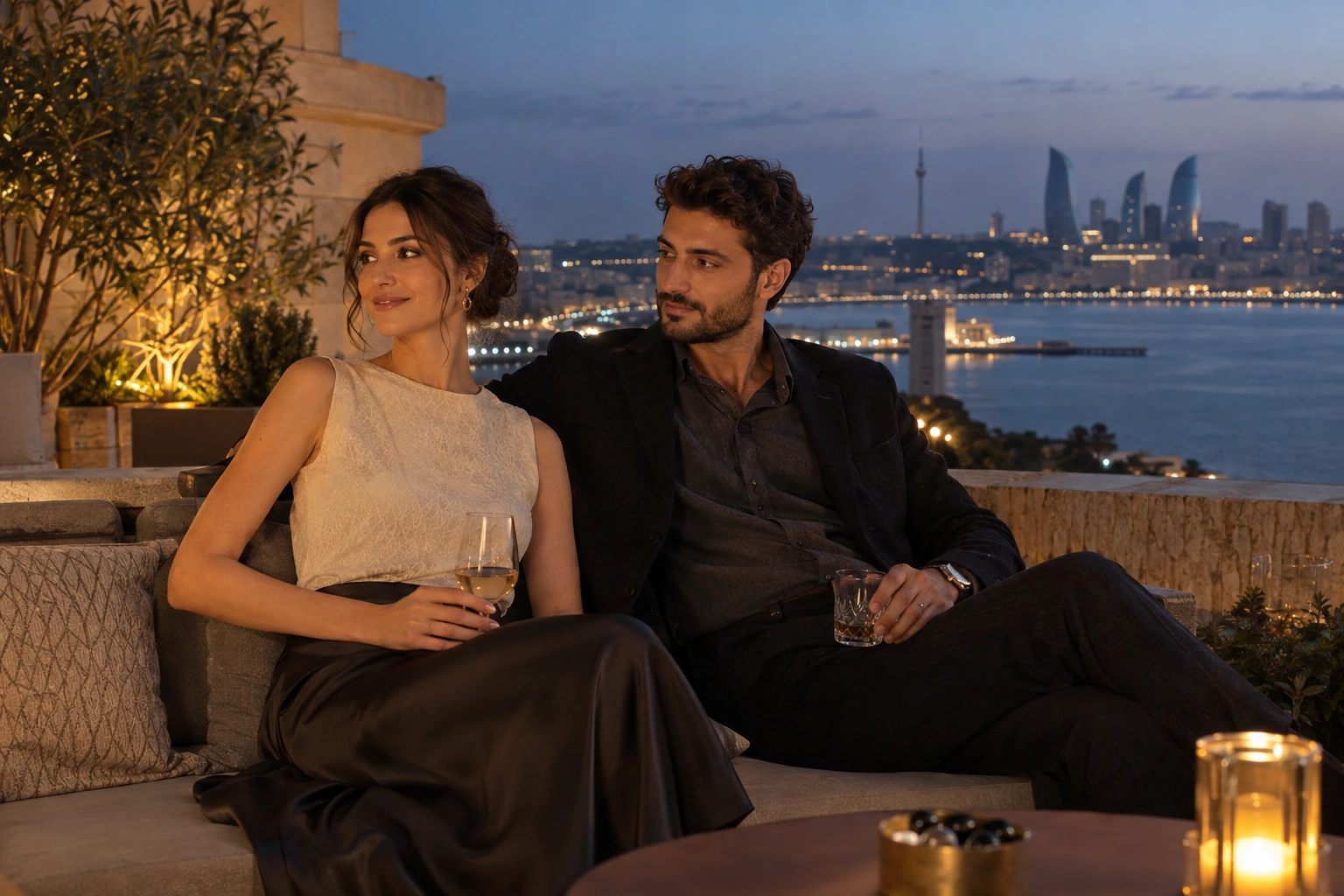
Evening is where the wardrobe can become more expressive. Chloé’s Winter 2026 collection combines embroidered shirts, ruffles and folkloric pattern with structured jackets. It offers a useful principle to borrow: softness and decoration can sit beside tailoring without overwhelming it.
For women, keep the daytime trouser and change the top. Lace at a neckline, a panel of cutwork or a restrained embroidered surface supplies enough interest without demanding an elaborate dress. Check the lining and opacity in advance, especially if the piece looks very different in daylight and under interior lighting. A simple camisole may solve the problem, but it should be part of the planned outfit rather than a last-minute addition.
A fluid skirt with a clean sleeveless top is another route. Let the fabric move, but keep its length practical for the journey. If a dress feels easier, choose one with a single point of interest—a shaped neckline, a textured surface or an unexpected colour—and let the accessories remain simple.
For men, move from the daytime polo to a fluid shirt with a more deliberate collar or subtle texture. A dark trouser and soft blazer provide a quiet frame for it. The shirt need not be conspicuously decorated: a little sheen or a different weave can create enough contrast. If you prefer a plain shirt, make the scarf or jewellery the expressive element instead.
Choose evening footwear around the actual route. If there is time to return to the hotel, that is the moment to change into a more delicate shoe. If dinner follows the circuit directly, build the look around the pair already on your feet. A good outfit should not require you to endure the walk to reach the table.
The adjustment can be small. One surface, one colour or one accessory is enough to mark the change of pace.
The Pronte Edit
Start with what you own, then identify the missing piece. These are the wardrobe roles worth prioritising; a new purchase should make more than one outfit possible.
The light tailored layer
Look for a jacket or waistcoat that creates shape without relying on heavy padding or dense fabric. An unlined blazer, a neatly cut waistcoat or a softly structured jacket should work over at least two of your chosen tops. Make sure it is easy to carry when removed.
The polished daytime top
A breathable collared knit, cotton shirt or fluid blouse should look finished without a jacket. Check the neckline, sleeve and length against your trousers, and test whether you prefer it tucked or untucked. This is the piece that will do most of the daytime work.
The adaptable bottom
Choose trousers that allow movement and sit comfortably through a long session, or a skirt that does not restrict your stride. A clean hem and a good fit matter more than chasing the widest or narrowest silhouette. Ideally, this piece also belongs in the evening outfit.
The evening change
Reserve space for one top or shirt with texture, decoration or subtle lustre. Try it with the daytime bottom before deciding it earns the luggage space. If the combination needs several other purchases to work, another piece may serve you better.
The finishing pieces
Keep the everyday bag light, with a secure closure and a strap you trust. Add sunglasses and, if desired, a locally made silk accessory. These should finish the wardrobe without making it cumbersome. A familiar pair of walking shoes remains essential, even if a second pair is packed for dinner.
Before You Pack
Check the latest forecast before departure and again before heading to the circuit. Let it determine whether your extra layer is a fine cardigan, a light jacket or something more protective.
Read the official Baku City Circuit terms: the prohibited-items list includes large bags and rigid-frame bags that will not fit beneath a viewing-platform seat. Do not assume a fashion bag is approved simply because it is described as small. Check any separate hospitality or venue guidance too.
Finally, walk in the shoes, sit in the trousers and secure loose scarf ends. Pack the pieces that work together, not just the ones that look impressive alone. You should be able to give the race—and the city—your attention.